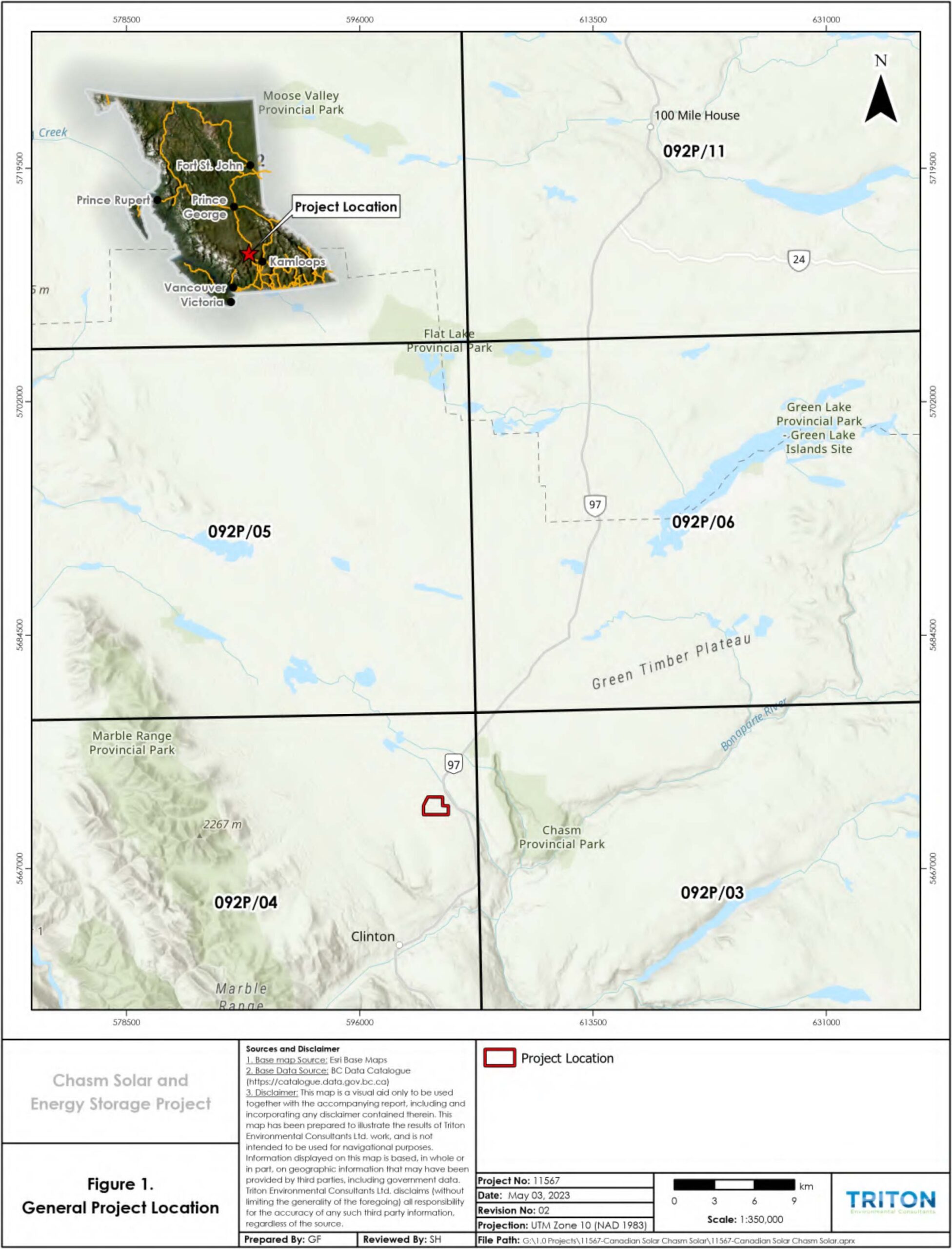
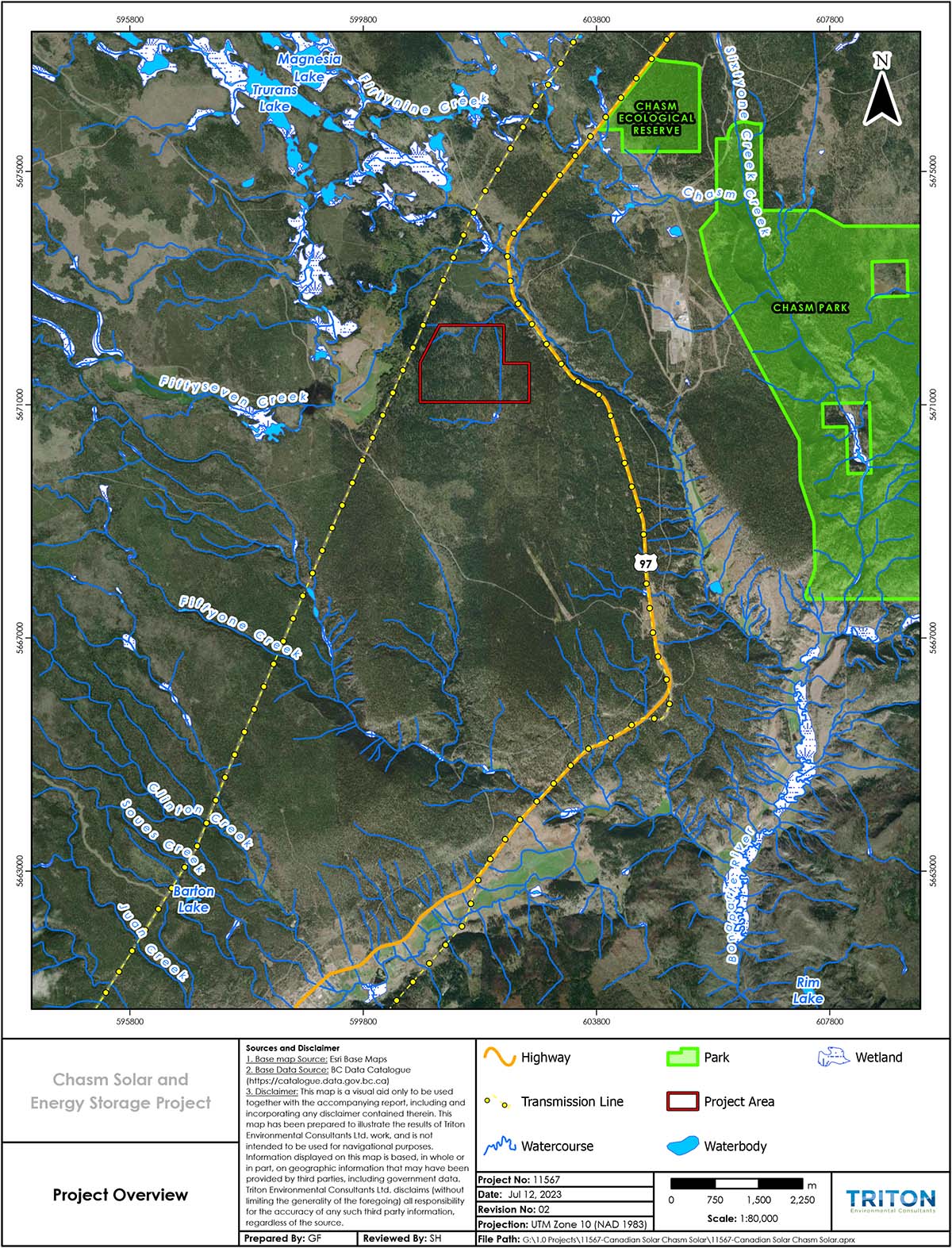
리커런트 에너지의 자회사인 Chasm BC 태양광 프로젝트 유한 파트너십은 브리티시컬럼비아주 남부 내륙 지역에 약 100MW 규모의 태양광 및 최대 400MWh 에너지 저장 시설인 Chasm 태양광 및 에너지 저장 프로젝트(프로젝트)를 개발 중입니다. 이 프로젝트는 약 205헥타르의 부지에 건설될 예정입니다.
리커런트 에너지의 자회사인 Chasm BC 태양광 프로젝트 유한 파트너십은 브리티시컬럼비아주 남부 내륙 지역에 약 100MW 규모의 태양광 및 최대 400MWh 에너지 저장 시설인 Chasm 태양광 및 에너지 저장 프로젝트(프로젝트)를 개발 중입니다. 이 프로젝트는 약 205헥타르의 부지에 건설될 예정입니다.
| Location | · Southern Interior Region of BC, 캐나다 |
| Project Capacity | Approximately 100 MW solar and up to 400 MWh battery energy storage |
| Homes Powered | Approximately 20,000 annually |
| Targeted Operation Date | Q4 2027 |
| Acreage | Approximately 205 hectares |
| Interconnection | System Impact Study to be completed by BC Hydro |
| Customer | TBD |
| Est. Jobs Created | Approximately 160 construction jobs during peak construction as well as 4 full-time jobs and additional part-time jobs during operations |
| Estimated Taxes | TBD |
| Earliest Construction Start Date | Q4 2026 |
Approximately 205 hectares.
In the last decade, the cost to install solar has dropped by more than 50% and has experienced an average annual growth rate of 33%. Solar project generate electricity at a lower cost per megawatt hour than would other possible fossil fuel and most renewable energy options. These results have been bolstered by the International Energy Agency’s World Energy Outlook 2021, which found, “in most markets, solar PV or wind now represents the cheapest available source of new electricity generation.” Because solar PV is a technology and not a fuel (like oil, gas and coal), costs will continue to decline as research continues to improve existing technology.
Because the photovoltaic (PV) panel materials are enclosed and do not mix with water or vaporize into the air, there is little-to-no risk of chemicals, including greenhouse gases, being released into the environment during normal use. Crystalline silicon PV panels, which are extremely common and used worldwide, “do not pose a material risk of toxicity to public health and safety.”
All solar facilities are designed to strict electrical safety standards to ensure safe operation.
Glint refers to the direct reflection of the sun on a solar panel. Glare is a continuing source of brightness, not the direct reflection of the sun. Solar arrays are designed to absorb light and produce electricity, not reflect it. The panels that we will use for the Chasm Solar and Energy Storage Project have an anti-reflective coating, which helps to increase the amount of light absorbed into the cell, thereby increasing efficiency and reducing glare and allowing the panels to blend in more easily with the surrounding area.
The Project will be monitored during operating hours by onsite staff. The entire property will also be monitored remotely 24 hours a day, 7 days a week.
Maintenance crews will maintain the perimeter and interior landscaping within the project boundaries. The interior ground cover shall not exceed 18 inches, with a typical maximum height of 12 inches, so that it doesn’t interfere with the panels or other electrical components.
While producing electricity with photovoltaics emits no pollution, produces no greenhouse gas emissions, and uses no finite fossil fuel resources, it has been argued that solar power has a hidden carbon footprint due to solar panel manufacturing and project construction. Both fossil fuel and non-fossil fuel power technologies induce life-cycle greenhouse emissions that stem from the energy requirements for their construction and operation. Known as a “carbon debt,” this debt of energy must be paid off to calculate how solar projects reduce emissions over their lifetime. A typical utility-scale solar project—like the Chasm Solar and Energy Storage Project—repays its carbon footprint in roughly 12 months or less, providing decades of zero emission energy.
The project is being developed in a manner which avoids and minimizes impacts to wildlife. However, Recurrent recognizes that any land development activities may have impacts on the natural environment, including wildlife. The project will include the clearing of vegetation, disturbance to soils, and other activities during construction and operation which may directly or indirectly impact wildlife.
To better understand potential impacts, Recurrent will be completing environmental studies, incorporating traditional Indigenous knowledge, that will categorize existing habitat and wildlife within the project area. This information will inform project design and construction activities so that wildlife and their critical habitat may be avoided.
Where impacts cannot be avoided, Recurrent will implement best management practices (BMP) intended to minimize or mitigate impacts. Final BMPs are yet to be selected, as they will be informed by pending studies and engagement activities, however, it is expected that they may include controls for soil erosion and stormwater, construction outside of sensitive periods for wildlife (e.g., nesting periods for migratory birds), wildlife impact monitoring studies, migratory corridors, and construction and operation buffers around sensitive habitat.
Recurrent will be completing studies that will identify all aquatic resources, including wetlands, within the proposed project area. Once aquatic resources have been identified, the project layout and design will be modified to avoid them. It is expected that all aquatic resources will be avoided. However, if impacts to aquatic resources are required, the project will implement appropriate BMPs to minimize and mitigate for impacts.
The construction of the Project will not require toxic chemicals or processes. Photovoltaic (PV) panels typically consist of glass, aluminum, copper, silver, and semiconductor materials that can be successfully recovered and reused. Because the PV panel materials are enclosed and do not mix with water or vaporize into the air, there is little-to-no risk of chemicals, including greenhouse gases, being released into the environment during normal use. Crystalline silicon PV panels, an extremely common panel variant used around the world, “do not pose a material risk of toxicity to public health and safety.
In addition, to provide decades of corrosion-free operation, panels, like the ones that will be used for the Project, are encapsulated from air and moisture between two layers of plastic. The encapsulation layers are further protected with a layer of tempered glass on the front and a polymer sheet on the back. For decades, this same material has been used between layers of tempered glass to give car windshields and hurricane windows their great strength, allowing them to stay intact even if damage occurs.
The Project will use a solar panel tracking system, allowing the reflective surfaces to align with the sun as it moves across the sky. Therefore, due to continuous tilt, water will not collect on the panels during rainstorms. The rainwater that runs off the panels is absorbed into the ground, nurturing the groundcover. Any excess rainwater leaves the site as stormwater runoff, just as it does now.
Photovoltaic (solar) panels typically consist of glass, aluminum, copper, silver and semiconductor materials that can be successfully recovered and reused at the end of their useful life. Alternatively, solar PV components can be reused or refurbished to have a “second life” of generating electricity.
The Project will post financial security to cover the full cost of decommissioning at the end of the Project’s life. This financial assurance must be in place before construction begins.
The Project will implement an erosion and sediment control plan which will include appropriate BMPs to minimize erosion of and impacts to topsoil.
For more information, please contact [email protected]
저희는 프로젝트 개발 노력의 영향을 받는 원주민 국가 및 지역사회와 긍정적이고 협력적이며 지속 가능한 관계를 구축하기 위해 최선을 다하고 있습니다. 이러한 노력을 뒷받침하기 위해 원주민 커뮤니티와 의미 있게 소통하여 전통적인 토지 및 자원 사용을 더 잘 이해하고, 프로젝트 개발 과정에서 원주민 커뮤니티와 상호 이익을 위한 기회를 모색할 것입니다: