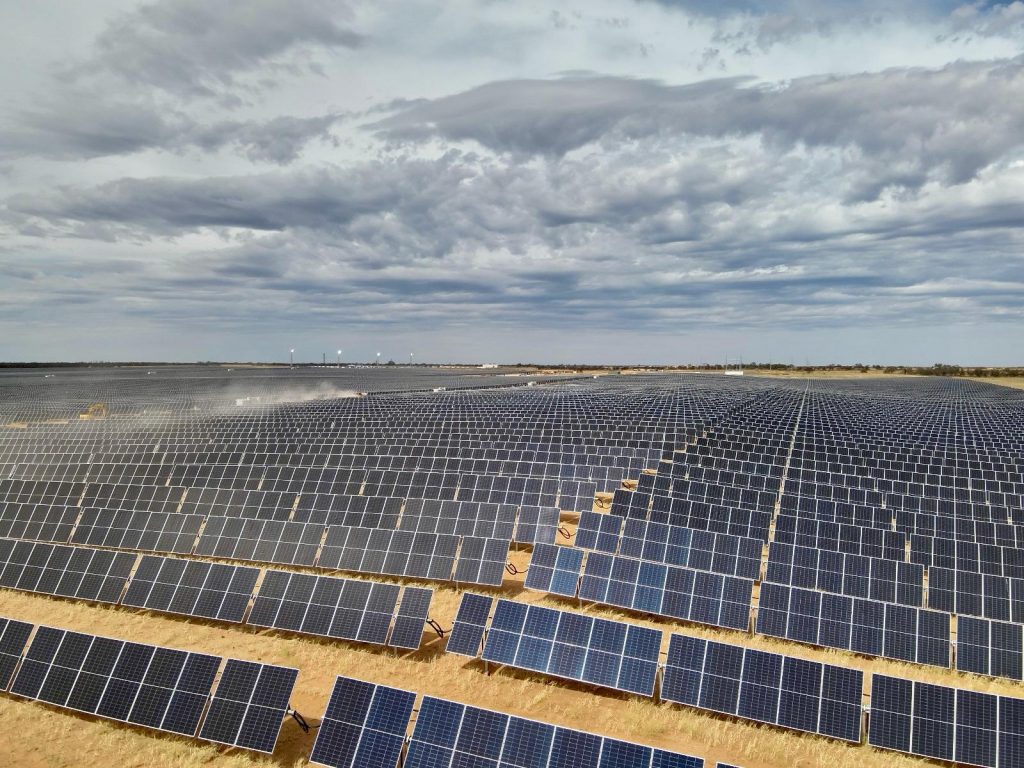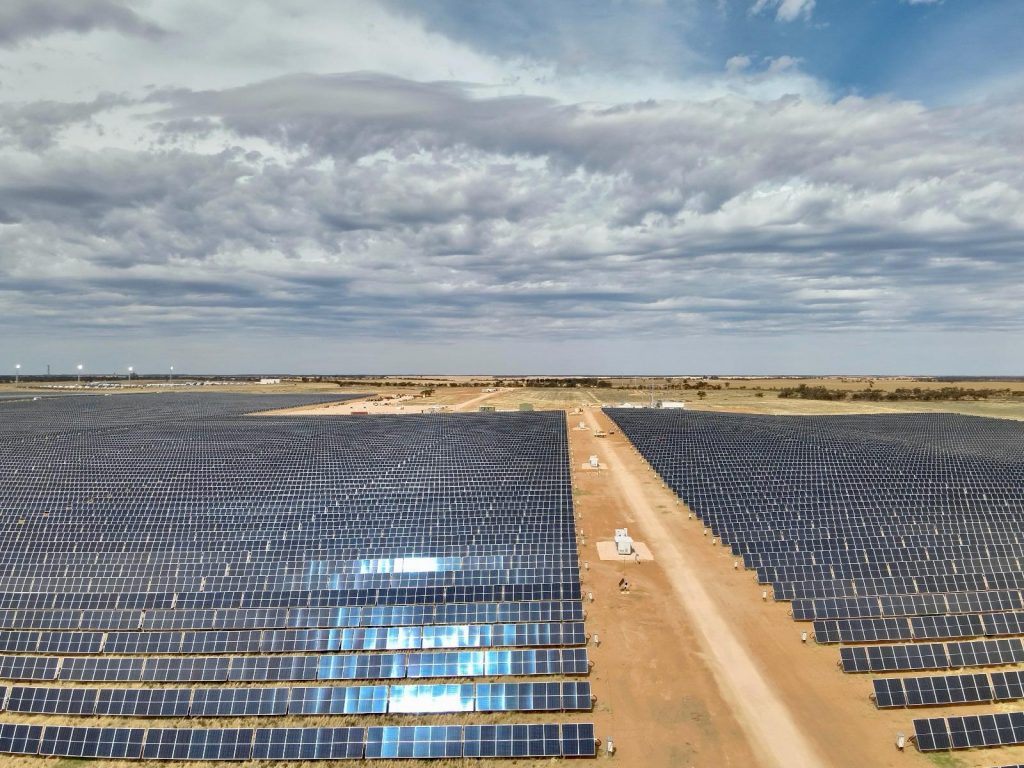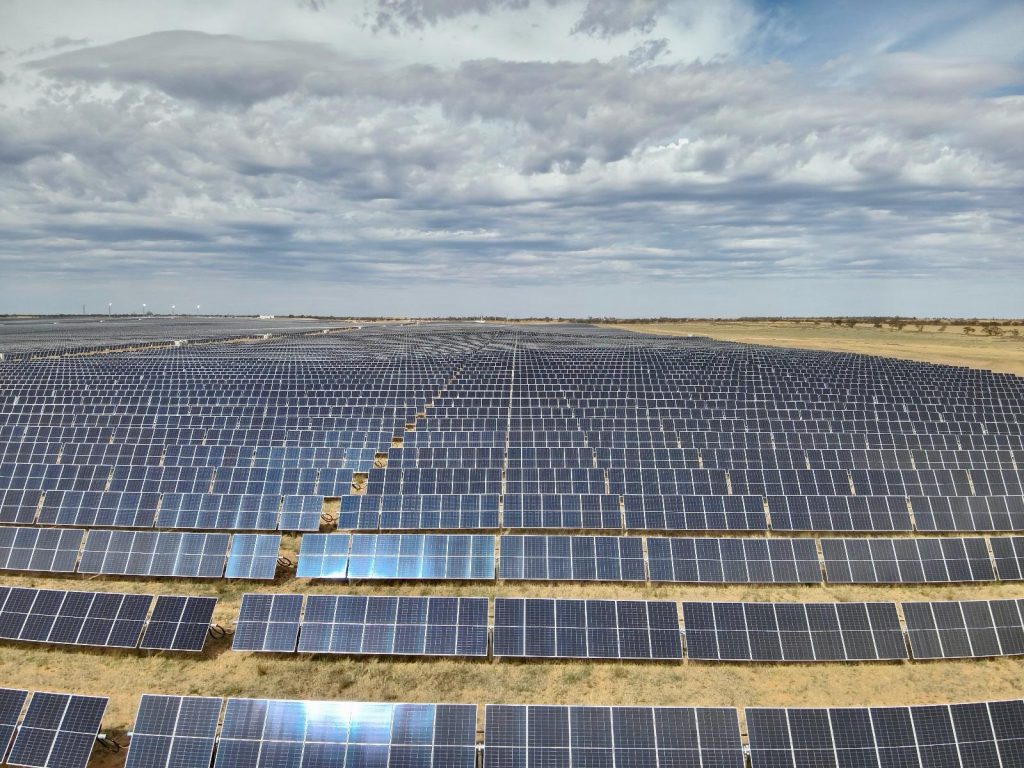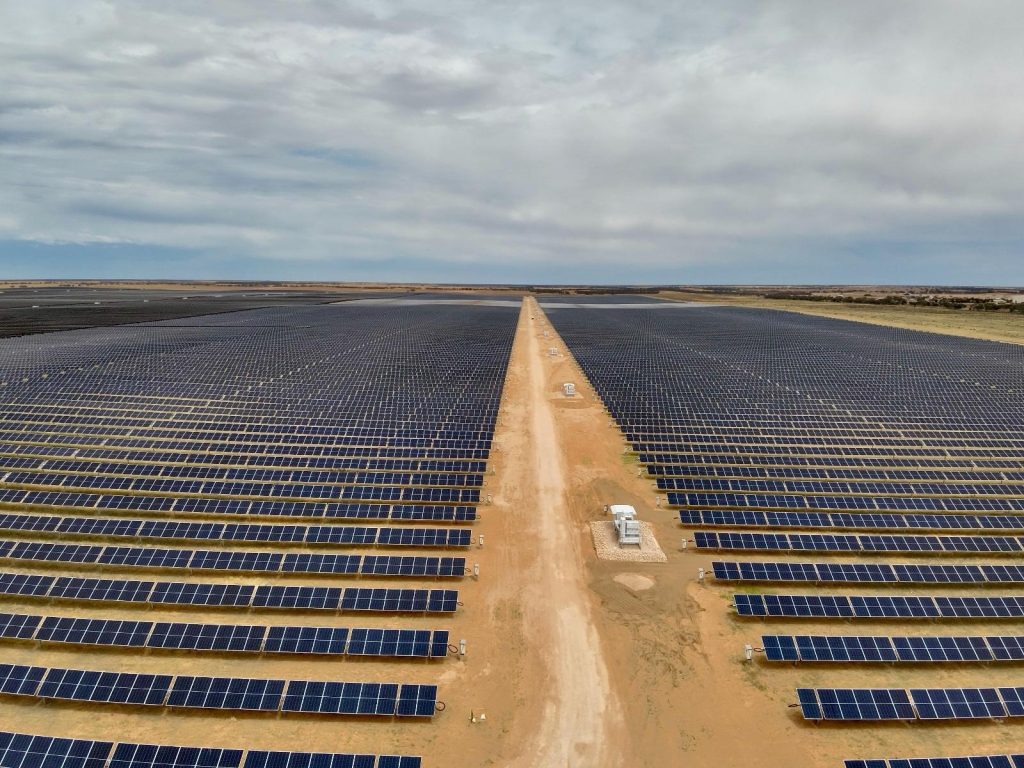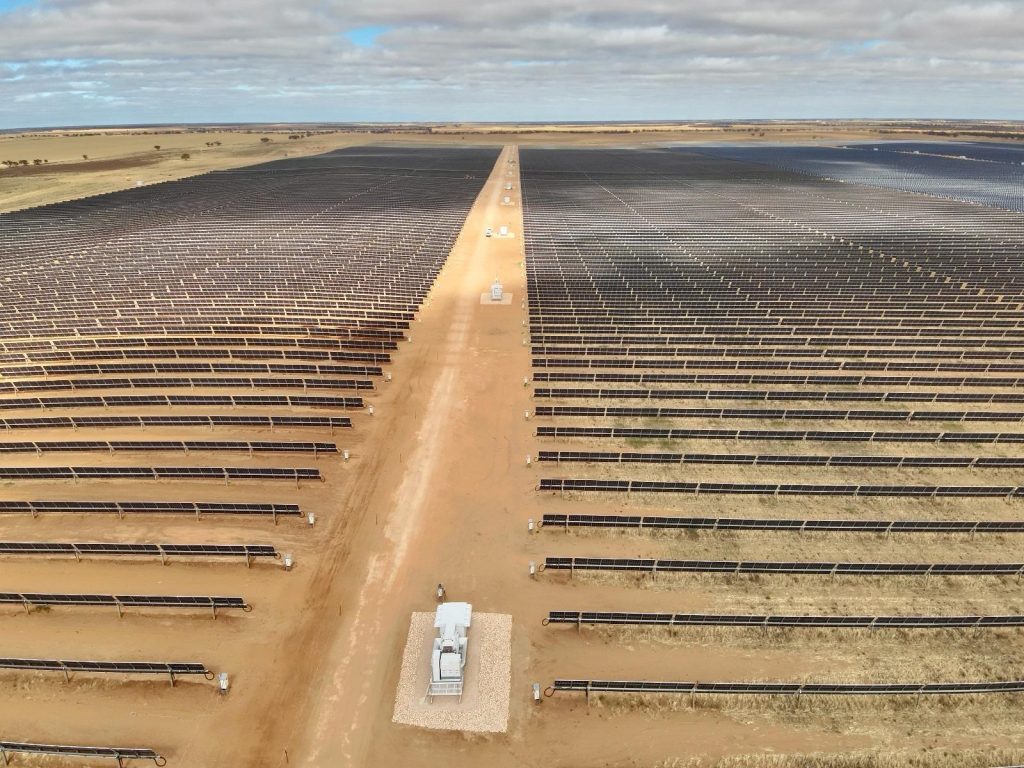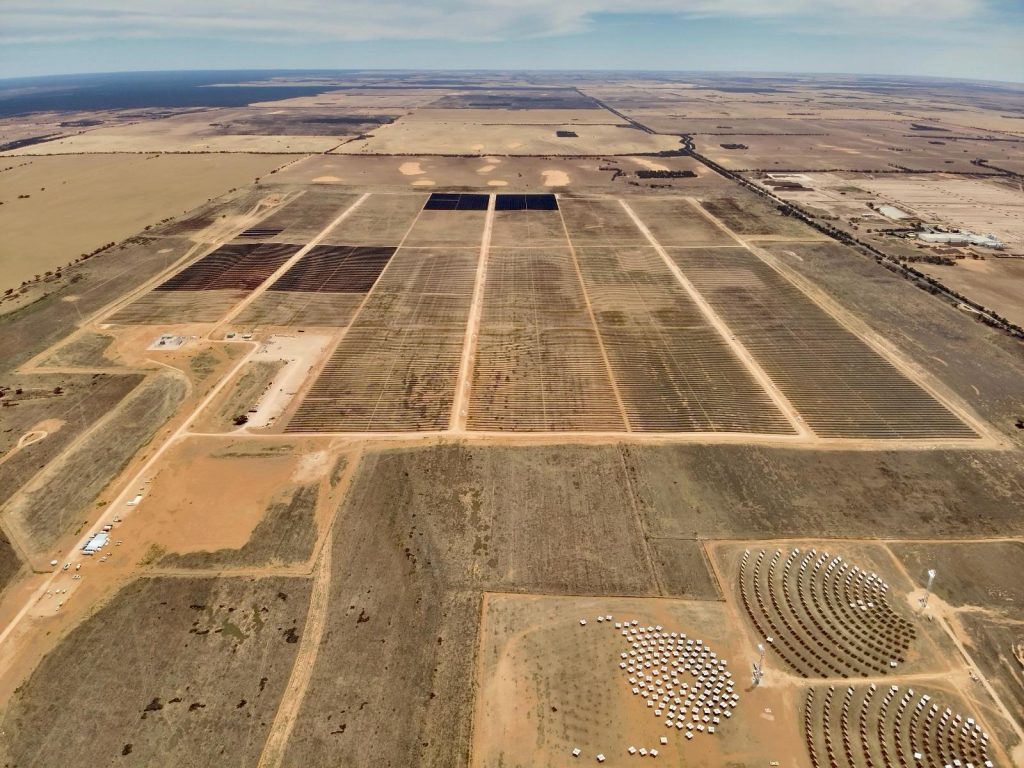
Recurrent Energy is developing Carwarp Energy Park, a 150MWh battery energy storage and solar facility, in Carwarp, Victoria, Australia. The project is currently under construction and is expected to reach commercial operation in 2026.
| Localização | Carwarp, Victoria, Australia |
| Project Capacity | 150 MWh storage and solar |
| Homes Powered | Approximately 90,000 homes |
| Targeted Operation Date | Q3 2026 |
| Área cultivada | 898 acres |
| Interconexão | Connecting to the 220kV AusNet Carwarp Terminal Station (CPTS) |
| Est. Jobs Created | Approximately 300 during construction |
| Data de início da construção mais antiga | 4/11/2024 |
Over the past decade, the cost of solar energy has fallen significantly in Australia, making large-scale solar one of the lowest-cost sources of new electricity generation in the country. Thanks to Australia’s excellent solar resources and continued advances in panel efficiency, construction methods and grid integration, new utility-scale solar projects are now often cost-competitive with — and increasingly cheaper than — new coal and natural gas generation.
Unlike fossil fuels, solar energy has no fuel costs and relatively low operating expenses, which helps provide more stable and predictable electricity prices over the long term. As solar PV is a technology rather than a finite resource, costs are expected to continue declining as innovation, improved manufacturing and economies of scale further enhance performance and affordability.
Large-scale solar projects, such as the Saluki Power Project, provide a diversified revenue stream to landowners that protects against fluctuating agricultural commodity prices and preserves family properties for future generations. In addition, these projects directly create hundreds of full-time equivalent jobs during the construction and installation phases and support indirect and induced jobs during development and construction.
Please see the link to the Economic Impact Analysis for more information.
Solar energy is one of the cleanest ways to generate electricity. When producing electricity, photovoltaic (PV) systems emit no air pollution, produce no greenhouse gas emissions and do not rely on finite fossil fuel resources.
While solar panels require energy and materials to manufacture and install, the overall environmental impact is very low compared with conventional energy sources. A typical utility-scale solar project—like the Carwarp Solar Farm—offsets the emissions associated with its construction in approximately 2–3 years. After that, it can generate clean electricity for decades without producing greenhouse gas emissions.
This means the Carwarp Solar Farm will contribute to reducing emissions while providing reliable, renewable energy for the region.
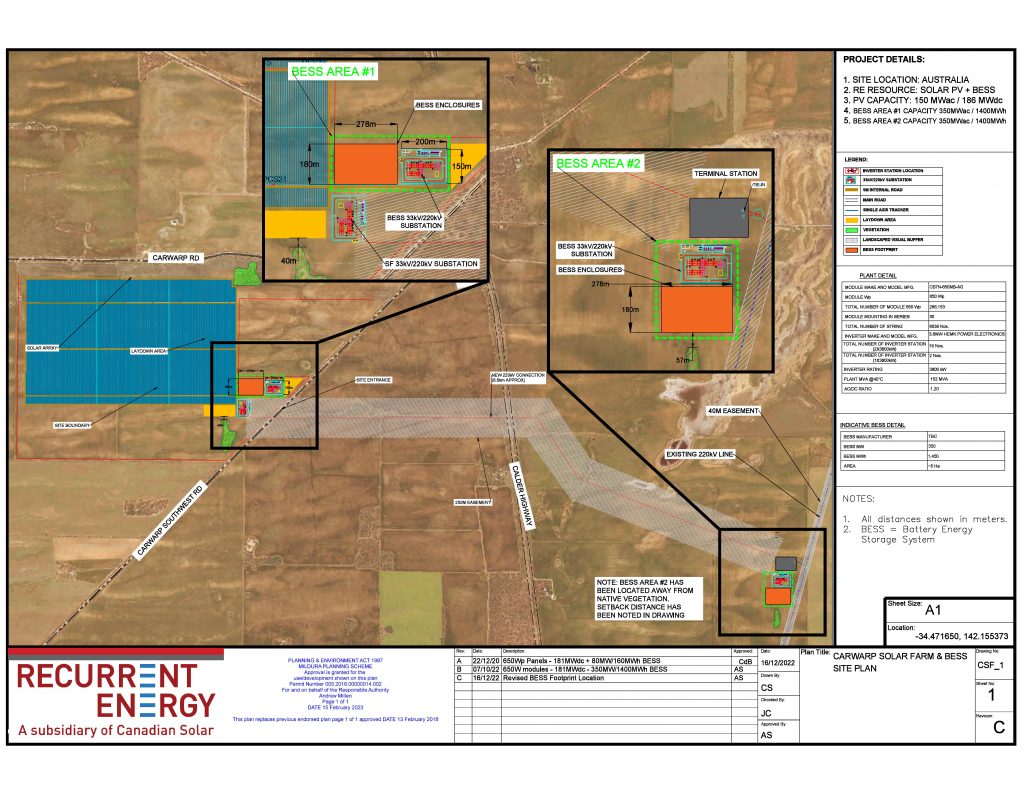
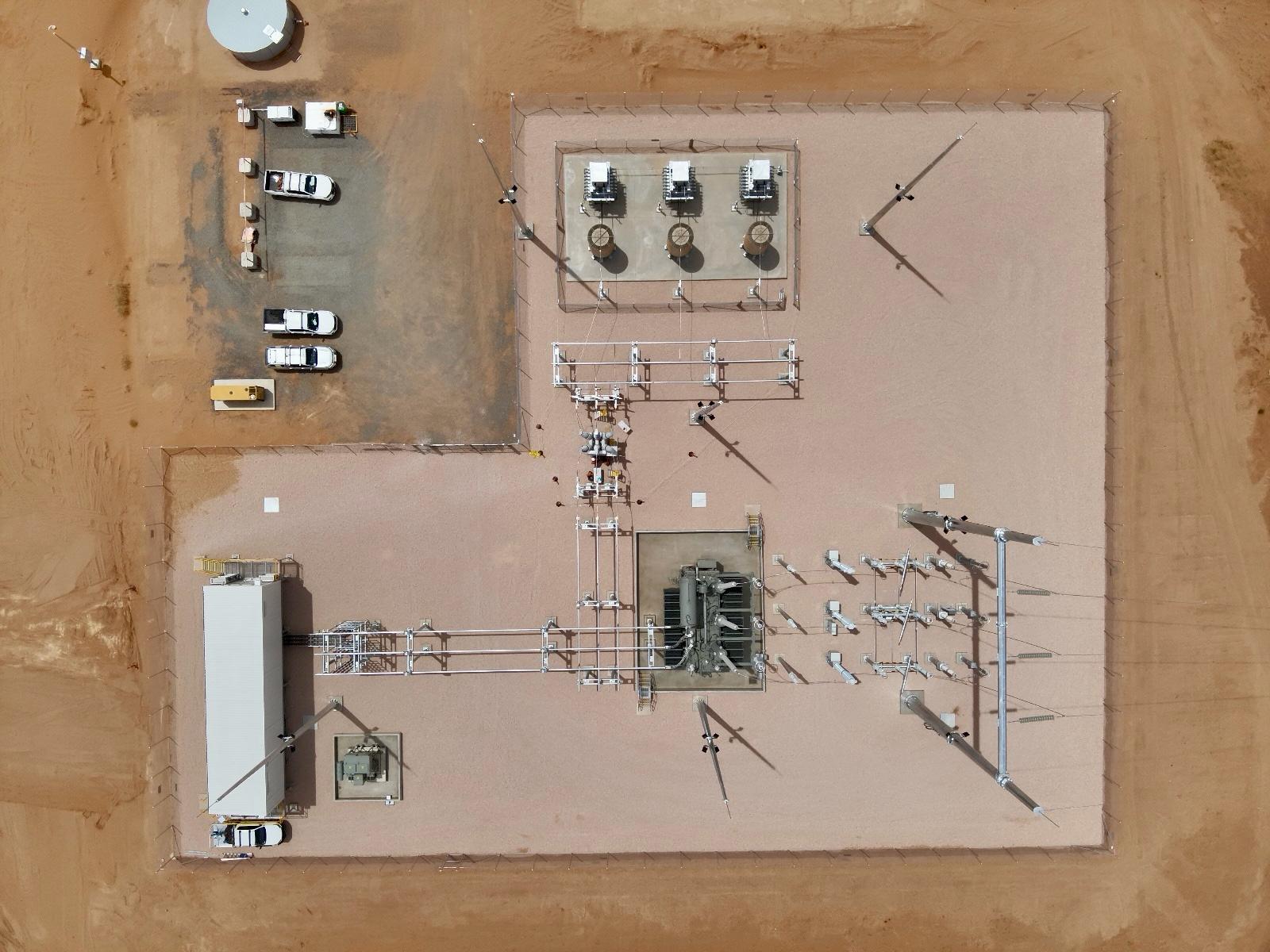
The project connects to the existing 220kV transmission line between Red Cliffs Terminal Station and Kiamal Terminal Station, via a tee connection. The project constructed a new Terminal Station for the tee connection as well as a new 220kV transmission line (roughly 6.5km long) to link the solar farm to the terminal station. A local step-up transformer at the solar farm increases the voltage to grid interface levels – from 33kV to 220kV.
At Recurrent Energy, safety is our top priority. Solar panels used in Australia are very safe during normal operation. The photovoltaic (PV) materials inside the panels are sealed between layers of durable glass and protective backing, meaning they do not mix with rainwater or evaporate into the air. As a result, there is little to no risk of chemicals being released into the environment during normal use.
Most large-scale solar farms in Australia use crystalline silicon panels, the most widely deployed solar technology worldwide. These panels are stable, durable and do not pose a material risk to public health, livestock or local ecosystems when properly installed and operated. To ensure safe and reliable operation, Recurrent Energy uses materials and equipment that comply with strict product safety standards.
All solar facilities in Victoria are designed and constructed to meet strict electrical and safety standards. Electrical design and installation requirements are governed by the Electricity Safety Act 1998 (Vic) and associated regulations, and must comply with relevant Australian Standards to ensure safe operation for workers, the community and the surrounding environment.
Glint refers to the direct reflection of sunlight from a solar panel, while glare is a more continuous brightness rather than a direct reflection. Solar panels are designed to absorb sunlight and convert it into electricity, not reflect it.
The panels that will be used at the Carwarp Solar Farm are fitted with an anti-reflective coating, which increases the amount of light absorbed by the cells and improves efficiency. This coating also reduces reflection and glare, helping the panels blend more naturally into the surrounding landscape.
In addition, landscaping around the perimeter of the project will help buffer any potential glint or glare.
The Carwarp Solar Farm will be monitored during operating hours by onsite staff. The entire property will also be monitored remotely 24 hours a day, 7 days a week.
Several upgrades have been implemented to improve traffic safety around the Carwarp Solar Farm site. These include the construction of a new access road and upgrades to existing roads, including grading and compaction to support construction and operational traffic.
Key intersections and heavy vehicle access points were also upgraded to allow safe movement of construction and service vehicles. In addition, traffic management measures and safety inductions are in place to ensure all personnel comply with site safety and traffic management requirements.
Carwarp Solar Farm holds an Incorporated Document which is issued under the Mildura Planning Scheme which permits, with specific conditions, the construction of the solar farm arrays and local substation. The project also has a Secondary Planning Permit which allows the construction of the grid connection infrastructure, with its own set of conditions. The Responsible Authority for these planning permits and conditions of consent is the Mildura Rural City Council.
Cultural heritage assessments during development concluded that the project area does not impact any Cultural Heritage Sensitivity area as identified by the Victoria DELWP guidelines. Field inspection of Carwarp revealed there are no Aboriginal Places located there and no areas of PAS (Potential Archaeological Sensitivity). The project has created a Chance Finds Protocol for its management plans, in the unlikely event artifacts are found though none were identified throughout its advance construction status. All contractors and agents of the project must adhere to the Chance Finds Protocol.
For more information, please contact: [email protected]
Endorsed Plan Secondary Consent – Carwarp Energy Park